
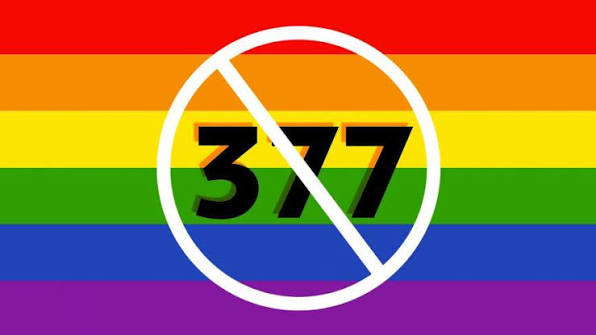
A biblical reflection on the anniversary of the reading down of Section 377
On 6 September 2018, the Supreme Court of India read down Section 377 of the Indian Penal Code, decriminalising consensual same-sex relations between adults. It was a landmark legal moment-but for queer Christians, the deeper question remains: What must the Gospel change in us?
The law can be changed in a courtroom, but the structures that made it possible continue to live in families, churches, schools, and religious imaginations. Here are four reflections for the journey.
The law named queer bodies as “unnatural”-but the Gospel refuses such labels
Section 377 was a colonial construction that did more than regulate behaviour. It constructed certain bodies and desires as abnormal, immoral, and dangerous. Scripture witnesses repeatedly to the violence that occurs when human beings create categories of clean and unclean, acceptable and unacceptable binaries. The eunuch knew this. The Samaritan knew it. The foreigner knew it. The person whose existence did not fit the dominant social imagination knew it.
And the Gospel repeatedly asks: Who created these boundaries, and in whose interest do they exist?
The incarnation itself is God’s refusal to remain safely outside human vulnerability. Once God has entered flesh, Christian theology can no longer despise flesh.
The Ethiopian eunuch reminds us: nothing prevents us from belonging
Acts 8 offers one of the most powerful texts for a queer theological imagination. Philip encounters an Ethiopian eunuch-a body that religion could not easily classify. The eunuch asks:
“What is to prevent me from being baptised?” That question echoes through queer Christian experience. For generations, queer people have entered churches asking: What is preventing me from being fully Christian? Not merely tolerated. Not merely welcomed into a pew. But fully beloved, fully sacramental, fully capable of ministry.
Philip does not demand that the eunuch become less eunuch. He does not say, “First become acceptable.” Instead, the waters open-and the answer is clear: Nothing.
Isaiah 56 had already imagined this God-one who gives the eunuch a name better than sons and daughters. Liberation begins when oppressed people reclaim the authority to name themselves and discover that God was never dependent upon the oppressor’s vocabulary.
Galatians 3:28 challenges every hierarchy
Paul writes:
“There is no longer Jew or Greek, there is no longer slave or free, there is no longer male and female; for all of you are one in Christ Jesus.”
Paul is not saying differences magically disappear. He is announcing that the old hierarchies cannot determine one’s belonging in Christ. The church cannot proclaim “In Christ there is neither male nor female” and then build its theology upon rigid assumptions about what a man or woman must be. It cannot preach baptismal equality while maintaining ecclesial inequality.
Galatians 3:28 is not a decorative verse for Pride Sunday-it is an ecclesiological challenge. It asks: What kind of community emerges when the categories by which society ranks human beings lose their power to determine belonging?
Decriminalisation is not liberation- the church must change too
Eight years on, the celebration cannot simply be “We won.” The more difficult question is: Who is still waiting for freedom?
– If a queer person can legally love but cannot safely come home, liberation is incomplete.
– If they can exist publicly but cannot receive communion without hiding, liberation is incomplete.
– If they can study Scripture but cannot preach without fear, liberation is incomplete.
– If the church celebrates the Court judgment but continues to preach queer exclusion, then it has celebrated a legal liberation it has not yet allowed to become a theological liberation.
A Queer prayer
God of Nazareth, You have never been confined to the places we considered respectable. You were born outside the centre, walked among the excluded, touched bodies others feared, and called strangers into friendship.
On this anniversary of a law being read down, we remember those whose bodies were once named criminal, whose love was forced into hiding.
But we confess that the church has often been slower than the law. Forgive us for baptising exclusion. Forgive us for making heterosexuality a condition of belonging to Christ.
Teach us again the question of the Ethiopian eunuch: “What is to prevent me?”
And let the answer of the Gospel be clear: Nothing.
No body. No gender. No sexuality. No caste. No disability. No border. No social status. Nothing can make a person less worthy of the love of God.
Make your church a place where queer people do not merely survive, but flourish-where difference is not tolerated but celebrated, where the table is widened, not guarded.
For in Christ, the categories that divided us no longer have the final word.
Amen.
“There is no longer Jew or Greek, there is no longer slave or free, there is no longer male and female; for all of you are one in Christ Jesus.” – Galatians 3:28
Leave a Reply